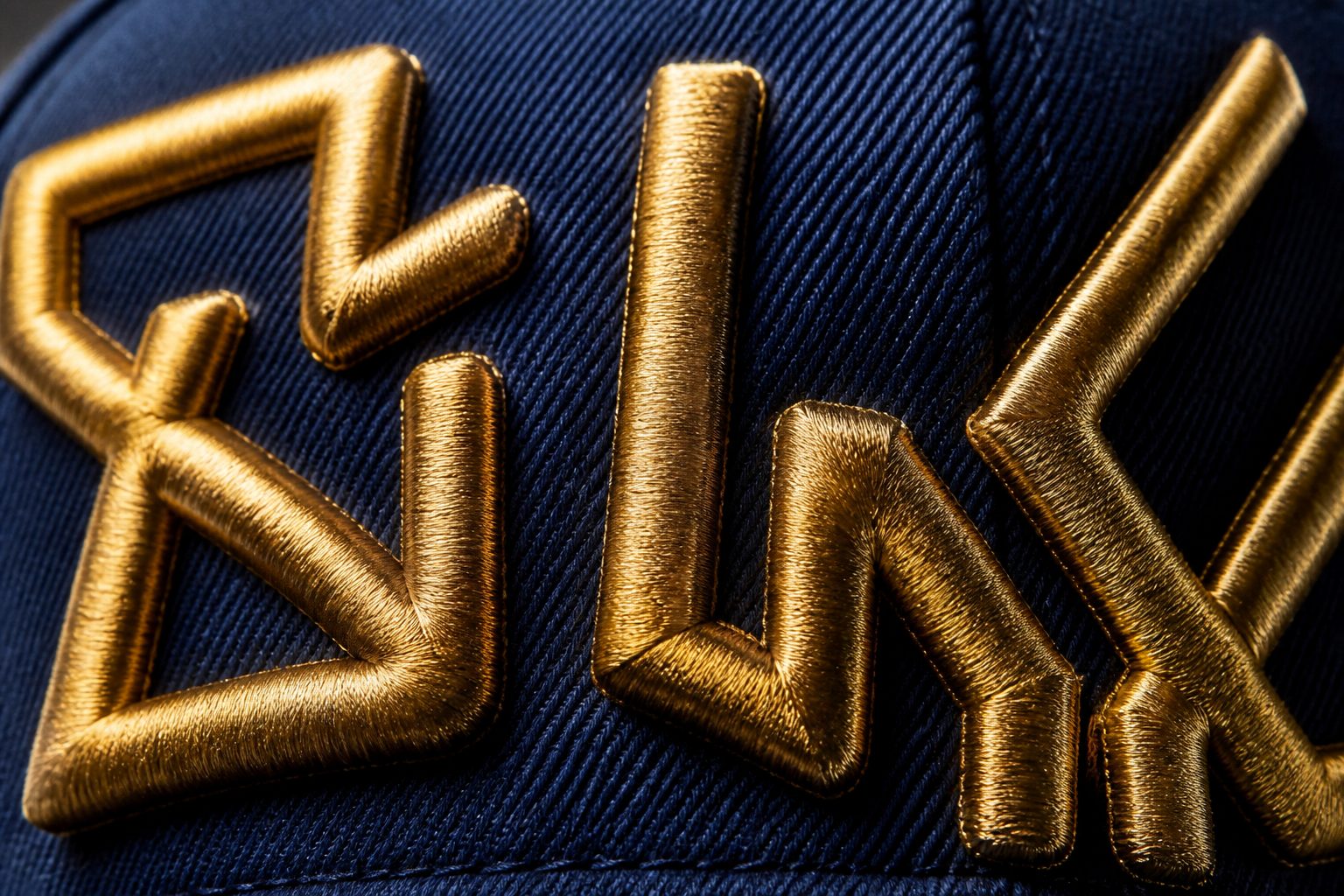
3D embroidered patches—often called puff embroidery—use foam under the stitch so letters and shapes stand up. On a snapback in a UK streetwear lineup, that height is the whole point. Flat fill cannot fake it. Chenille is a different plush (yarn, not foam). Pick puff when you want a hard, wrapped, raised letter, not a fuzzy varsity pile.
How puff embroidery works
A layer of foam sits on the fabric. Satin or similar stitches wrap over it and cut the foam to the letter shape. Light hits the sides of the letter. That is why simple block type looks expensive and why thin script looks broken.
What puff does well—and what to avoid
| Works | Does not work |
|---|---|
| Bold block letters and simple icons | Hairline script and 4-point type |
| Thick outlines with room for foam | Tiny inner counters (e, a, 8) |
| Hat wordmarks and one main logo | Photorealistic portraits |
If the logo is intricate, use flat embroidery or woven, or puff only the main wordmark and flatten the rest. Mixing heights on one patch is possible; it must be planned in digitizing, not guessed on the machine.
Hats vs jackets
Most 3D patch orders in the UK go on hats. Jackets can take puff too, but large foam areas should be tested on the mockup so the patch still flexes. Backing is usually sew-on. Iron-on is a poor match for thick foam on structured caps.
Puff vs chenille
Chenille is yarn on felt—varsity, fuzzy, big letters. Puff is thread over foam—crisper edges, hat-friendly, more “streetwear logo” than “letterman.” If you want both looks, order two designs. Do not expect one process to imitate the other perfectly.
How to order 3D patches
Send a bold wordmark or icon, size in inches, quantity (5 minimum), and sew-on unless you have a special request. We digitize with multi-level stitch and send a free mockup—usually within 12 hours—so you can approve height before we produce and ship UK-wide.